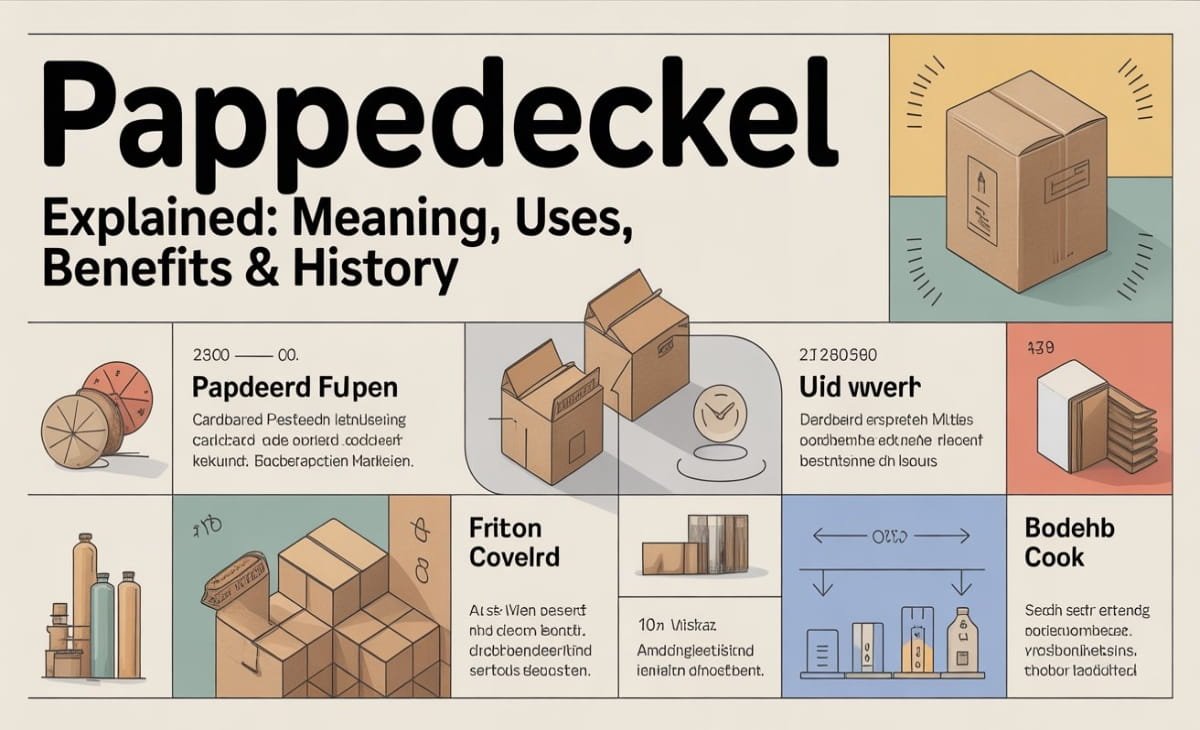
Pappedeckel Explained: Meaning, Uses, Benefits & History
if you’ve ever opened a sturdy book cover, handled premium packaging, or worked on a craft project that needed structure without weight, you’ve already encountered it, even if you didn’t know its name. Despite being a simple material, pappedeckel continues to play a crucial role in packaging, publishing, design, and sustainability-focused industries. What surprises many people is how relevant this traditional cardboard material still is in a world dominated by plastics and composites.
This article exists to answer a very specific search intent: What is pappedeckel, where is it used, and why does it matter today? Based on years of observing packaging supply chains, print production workflows, and eco-material sourcing, I’ll walk you through not just the definition, but the real-world value of it, its limitations, and how professionals choose it over alternatives.
What Is Pappedeckel? A Clear and Practical Definition
Pappedeckel is a thick, rigid cardboard material, traditionally produced from compressed paper fibers. The word originates from German, where “Pappe” refers to cardboard and “Deckel” implies a cover or lid. In practice, it is best understood as chipboard or greyboard, though quality and density can vary significantly depending on production standards.
Unlike corrugated cardboard, it does not rely on fluted layers. Instead, it gains strength from density and compression, making it flat, smooth, and ideal for applications where shape stability matters more than cushioning. In publishing and packaging industries, pappedeckel is valued because it holds form exceptionally well while remaining lightweight and cost-effective.
Why Pappedeckel Still Matters in 2025
Many assume cardboard is outdated, yet demand for it is quietly rising. The reason is simple: sustainability pressure. As brands move away from plastics, materials like pappedeckel offer a recyclable, biodegradable, and widely available alternative.
From my own experience working with packaging vendors, I’ve seen companies reduce plastic usage by over 40 percent simply by redesigning boxes and inserts using higher-density pappedeckel. It meets both environmental goals and structural needs, something few materials manage simultaneously. This renewed interest makes it more relevant now than it was a decade ago.
Common Uses of Pappedeckel in Real Life
Pappedeckel is everywhere once you know what to look for. In bookbinding, it forms the rigid covers of hardcover books, providing durability while allowing fabric or paper wrapping. And In packaging, it’s used for luxury boxes, smartphone packaging inserts, cosmetic kits, and gift boxes where presentation matters as much as protection.
In crafts and education, it is a favorite material for model making, architectural prototypes, and school projects because it cuts cleanly and holds glue well. In industry, it’s often used as protective layering between products during shipping.
A helpful visual here would be a cross-section diagram comparing pappedeckel, corrugated cardboard, and paperboard, showing thickness, density, and structure differences.
Key Benefits That Make Pappedeckel a Preferred Material
The main advantage of it lies in its structural consistency. It doesn’t bend easily, doesn’t warp under moderate pressure, and maintains clean edges. This makes it ideal for printing, laminating, and surface finishing.
Another benefit is sustainability. Most pappedeckel is made from recycled paper fibers, and it can be recycled multiple times. According to environmental research published by Harvard’s sustainability programs, fiber-based packaging has a significantly lower long-term environmental impact than petroleum-based plastics when managed correctly.
Cost efficiency is another factor. Compared to wood, plastic sheets, or molded pulp, it delivers a strong balance of price, availability, and performance.
Challenges and Limitations You Should Know About
Pappedeckel is not waterproof. Exposure to moisture can weaken its fibers, cause swelling, or lead to deformation. This is why many manufacturers apply coatings, laminations, or wraps to protect it.
Another limitation is load-bearing capacity. While rigid, it is not designed to support heavy weights over time. In logistics, it often needs reinforcement when used in larger packaging formats.
Understanding these limits is essential. In my own sourcing experience, most failures happen when pappedeckel is used as a direct replacement for plastic without design adjustments.
Pappedeckel vs Other Cardboard Materials
People often confuse it with standard cardboard. The difference lies in purpose and structure. Corrugated cardboard excels at shock absorption, while pappedeckel excels at shape retention and surface quality.
A comparison chart would work well here, visually showing thickness, rigidity, surface smoothness, and ideal use cases across materials.
Professionals choose it when the product must look premium, remain flat, and feel solid in the hand.
How Pappedeckel Is Made: A Behind-the-Scenes Look
Pappedeckel production begins with recycled paper pulp. The fibers are pressed under high pressure to remove air and moisture, then dried into dense sheets. Thickness is controlled by layering and compression rather than fluting.
Factories often fine-tune density based on use case. Bookbinding boards differ from packaging boards, even if both are technically it. This nuance is rarely discussed online, yet it’s crucial for buyers who want consistent results. A short factory-process diagram would help readers visualize fiber compression and drying stages.
Sustainability and Environmental Impact
Pappedeckel fits perfectly into the circular economy. It is recyclable, biodegradable, and often sourced from post-consumer waste. Government environmental agencies consistently rank paper-based packaging among the most recyclable materials globally.
According to data from European environmental agencies, over 80 percent of paperboard products are successfully recovered and reused in regions with proper recycling infrastructure. This makes it an attractive choice for brands looking to meet ESG goals without sacrificing performance.
How to Choose the Right Pappedeckel for Your Project
Selecting the right it depends on thickness, density, and surface treatment. For book covers, higher density ensures longevity. For packaging inserts, slightly lighter boards reduce cost while maintaining structure.
From professional experience, always request sample sheets before bulk orders. Small differences in fiber quality can dramatically affect cutting, gluing, and finishing results.
A step-by-step visual guide showing thickness selection based on application would be especially helpful for beginners.
Tools and Techniques Commonly Used with Pappedeckel
Designers and manufacturers often use die-cutting machines, laser cutters, and industrial guillotines to shape it precisely. For surface finishing, lamination films, cloth wraps, and printed papers are applied.
In crafts, simple utility knives and metal rulers are sufficient, which explains why pappedeckel remains popular in schools and studios.
Frequently Asked Questions
What is pappedeckel made of?
Pappedeckel is made from compressed paper fibers, often sourced from recycled paper, pressed into dense, rigid sheets.
Is pappedeckel the same as cardboard?
Pappedeckel is a type of cardboard, but it is denser and flatter than corrugated cardboard, designed for rigidity rather than cushioning.
Is pappedeckel environmentally friendly?
Yes, pappedeckel is recyclable, biodegradable, and typically produced from recycled materials, making it environmentally responsible.
Can pappedeckel get wet?
Pappedeckel is not naturally water-resistant. Moisture can damage it unless it is laminated or coated.
Where is pappedeckel commonly used?
It is widely used in bookbinding, premium packaging, crafts, educational models, and protective shipping layers.
Conclusion
Pappedeckel may not be flashy, but it is one of the most reliable, sustainable, and versatile materials in modern packaging and design. Its balance of strength, affordability, and environmental responsibility explains why it continues to thrive despite changing material trends.
If you’re designing packaging, sourcing eco-friendly materials, or simply curious about how everyday products are made, understanding it gives you a practical edge.
Explore further by testing samples, comparing densities, or consulting a packaging expert to see how pappedeckel can improve your next project. If you have experience using it, share your insights and keep the conversation going.