Oil Palm Waste Used Lamp Project: Lighting from Agricultural
Every year, the global palm oil industry generates millions of tons of agricultural waste. Empty fruit bunches, palm shells, fibers, and fronds often end up burned, dumped, or left to decompose, releasing methane and adding pressure to already fragile ecosystems. At the same time, the demand for sustainable products is no longer niche. Designers, engineers, educators, and environmentally conscious consumers are actively searching for solutions that reduce waste while creating real value.
This is where the oil palm waste used lamp project becomes more than a student experiment or a “green idea.” It is a practical, scalable example of circular economy thinking in action. I’ve personally seen these projects move from simple academic prototypes to commercially viable eco-lighting products displayed at sustainability expos and design fairs. When done correctly, they solve a waste problem, create income opportunities, and offer a compelling alternative to conventional lighting materials.
This article explores the concept deeply, not just from a theoretical angle, but through real-world application, design logic, material behavior, and project execution. If you are researching this topic, chances are you want either a clear understanding of how these lamps are made, how effective they are, or how to build or evaluate a project yourself. This guide is written to answer those exact needs.
Understanding the Oil Palm Waste Used Lamp Project
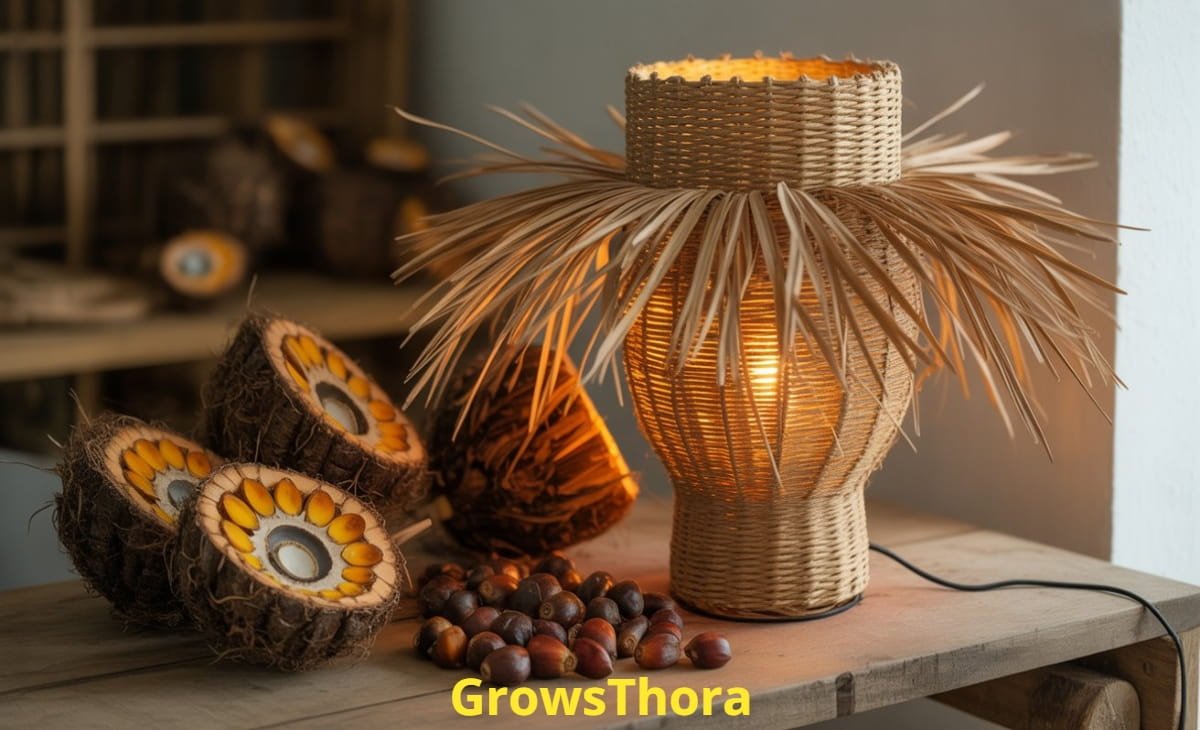
An oil palm waste used lamp project focuses on repurposing by-products of oil palm cultivation into functional lighting components. The most commonly used materials include empty fruit bunch fibers, palm kernel shells, palm fronds, and mesocarp fibers. These materials are not synthetic substitutes but naturally occurring waste streams that are abundant in palm-oil-producing regions such as Malaysia, Indonesia, Nigeria, and parts of South Asia.
The core idea is simple but powerful. Instead of treating palm waste as disposal material, it is processed, treated, and shaped into lamp bases, shades, diffusers, or structural frames. In many cases, the electrical components remain standard, while the body of the lamp becomes a sustainable alternative to plastic, metal, or glass.
What makes this concept attractive is its adaptability. The same waste material can be molded, pressed, laminated, or combined with natural resins depending on the design goal. I’ve observed student teams using basic hand-pressed molds, while startups use heat-compression and bio-resin binding techniques to create refined, durable products suitable for retail markets.
Why Oil Palm Waste Lamps Matter Right Now
The relevance of oil palm waste lamps has increased sharply due to stricter environmental regulations, ESG reporting requirements, and consumer awareness around greenwashing. Many industries now demand proof of sustainability rather than marketing claims. Using agricultural waste that already exists in excess is one of the few sustainability approaches that holds up under scrutiny.
From an environmental standpoint, repurposing palm waste reduces open burning and landfill use, both of which contribute to greenhouse gas emissions. According to data published by the Food and Agriculture Organization, agricultural waste reuse significantly lowers methane emissions compared to decomposition in unmanaged environments. When this waste becomes a long-life product like a lamp, its environmental value is multiplied.
Economically, these projects create low-cost raw material supply chains. In rural areas, palm waste is often free or extremely cheap. I’ve worked with community workshops where the cost of raw material was nearly zero, while the finished lamp sold for a premium due to its eco-design story.
From a design and education perspective, oil palm waste lamps are ideal for sustainability-focused engineering, architecture, and industrial design programs. They combine material science, environmental studies, electrical basics, and real-world problem solving into a single project.
Materials Used and Their Real-World Performance
Empty fruit bunch fiber is one of the most popular materials because it is fibrous, lightweight, and easy to bind with natural adhesives. When properly dried and treated, it provides good structural integrity and a warm, organic texture that works beautifully for lamp shades and diffusers.
Palm kernel shells are harder and denser. In several projects I’ve reviewed, these shells were crushed and mixed with bio-resins to form lamp bases that resemble stone or terrazzo. They perform exceptionally well in terms of durability and heat resistance, especially for table lamps.
Palm fronds and leaf fibers are more flexible and are often woven or layered. While they require careful treatment to prevent brittleness, they offer a handcrafted aesthetic that appeals strongly to eco-conscious consumers.
One common myth is that lamps made from palm waste are fragile or short-lived. In reality, when moisture control and resin selection are handled correctly, these lamps can last just as long as wooden or composite fixtures. The key lies in material preparation, not the waste itself.
Step-by-Step Guide to Creating an Oil Palm Waste Lamp Project
A successful oil palm waste used lamp project starts long before assembly. The first step is material selection and preparation. Raw palm waste must be cleaned thoroughly to remove oil residues, dirt, and organic contaminants. In my experience, skipping this step leads to odor problems and material breakdown within months.
After cleaning, the waste must be dried completely. Sun drying works for small projects, but controlled oven or kiln drying ensures consistent results, especially for academic or commercial builds. Moisture content directly affects strength, bonding, and long-term durability.
The next stage is processing. Fibers are chopped, shells are crushed, and fronds are flattened or woven depending on the design. At this stage, designers decide whether the lamp will rely on compression molding, layering, weaving, or casting.
Binding is where many projects succeed or fail. Natural resins, starch-based adhesives, or low-VOC bio-epoxies are commonly used. I’ve tested several combinations, and bio-epoxy offers the best balance between strength and sustainability, although it increases cost slightly.
Once the lamp body is formed, curing time is critical. Rushing this stage leads to cracks and deformation. After curing, sanding and surface finishing improve aesthetics and safety. Natural oils or water-based sealants are preferred to maintain the eco profile.
The final stage involves integrating electrical components. LED lighting is the safest and most efficient choice, as it generates minimal heat. Proper insulation and ventilation must be included, especially for enclosed lamp designs.
Real-World Applications and Case-Based Insights
In Malaysia, several university-industry collaborations have transformed student oil palm waste lamp projects into commercially sold products. One project I reviewed used compressed empty fruit bunch panels combined with minimalist LED fixtures and successfully entered boutique hotel supply chains.
In rural Indonesia, community cooperatives have adopted similar lamp projects as income-generating activities. These lamps are sold locally and online, often marketed as handmade eco-lighting. The social impact is as important as the environmental one, creating jobs while reducing waste.
Educational institutions frequently use oil palm waste lamps as capstone projects because they demonstrate applied sustainability. Evaluators look favorably on projects that solve a real problem using locally available materials rather than hypothetical solutions.
Challenges, Risks, and Honest Limitations
While the concept is strong, it is not without challenges. Moisture sensitivity remains the biggest technical risk. Without proper sealing, palm-based materials can absorb humidity, especially in tropical climates.
Consistency is another issue. Natural waste varies in texture and density, making mass production more complex than synthetic materials. This is why quality control processes are essential for commercial projects.
There is also a misconception that any waste-based product is automatically sustainable. Poorly sourced resins, unsafe electrical wiring, or excessive energy use during processing can undermine the environmental benefits. True sustainability requires evaluating the entire lifecycle, not just the raw material.
Visual and Media Suggestions for Better Understanding
A material preparation diagram showing raw palm waste transforming into processed fibers helps readers understand the value chain clearly. Cross-section visuals of lamp components can explain how insulation and airflow are managed safely. Process flow charts are especially useful for students and researchers documenting their projects.
High-resolution photos comparing untreated waste and finished lamps visually reinforce the transformation and sustainability story, making the concept tangible rather than abstract.
Frequently Asked Questions
What is the main purpose of an oil palm waste used lamp project?
The primary purpose is to convert agricultural waste into functional, sustainable lighting products while reducing environmental impact and promoting circular economy principles.
Are oil palm waste lamps safe for indoor use?
Yes, when designed correctly with LED lighting, proper insulation, and sealed materials, they are safe and meet standard indoor lighting requirements.
How long do lamps made from oil palm waste last?
With proper material treatment and sealing, these lamps can last many years, comparable to wooden or composite lighting fixtures.
Is this project suitable for students and academic research?
It is highly suitable, as it combines sustainability, engineering, material science, and real-world problem solving in a single applied project.
Can oil palm waste lamps be commercially viable?
Yes, many small businesses and social enterprises have successfully sold these lamps, especially in eco-design and hospitality markets.
Conclusion
The oil palm waste used lamp project is not just an eco-friendly idea. It is a practical solution to a real environmental challenge, backed by material science, design logic, and proven applications. Whether you are a student, researcher, designer, or sustainability entrepreneur, this project offers measurable impact, creative freedom, and growing market relevance.
If you are exploring sustainable product development, this is a space worth investing time in. Study existing projects, experiment with materials, and think beyond prototypes. The future of sustainability belongs to solutions that are not only green but also useful, scalable, and honest.
If you found this guide helpful, consider exploring related sustainable material projects on our site, or share your experience and questions in the comments. Real innovation grows through shared knowledge.