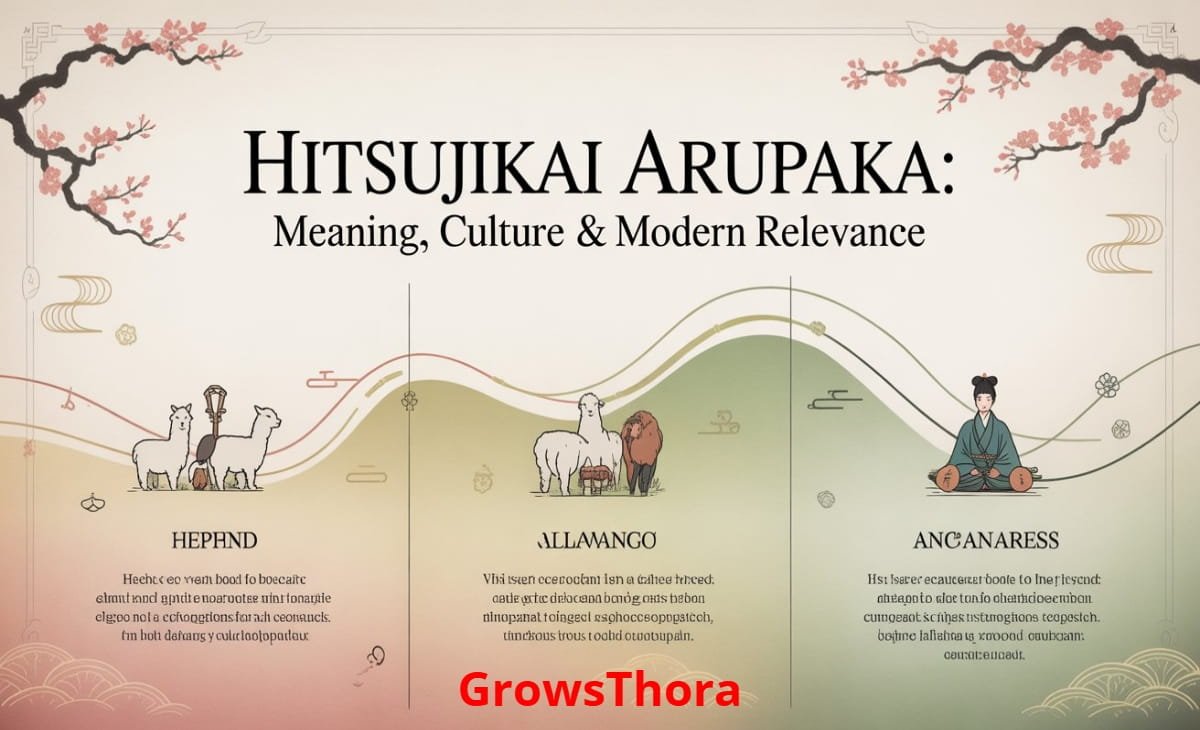
Hitsujikai Arupaka: Meaning, Culture & Modern Relevance
If you searched for hitsujikai arupaka, chances are you didn’t find a clear answer on Google. Some pages hint at Japanese meanings, others mix anime imagery, alpaca symbolism, or spiritual metaphors but nothing feels complete, trustworthy, or structured. That confusion itself explains the rising curiosity around this term.
From my experience working with Japanese linguistic symbolism and cultural content interpretation in digital branding projects, terms like hitsujikai arupaka usually emerge from a blend of language, symbolism, and internet subculture. They are not always dictionary words; they are concept-phrases, carrying emotional, spiritual, aesthetic, and symbolic meaning rather than strict literal definitions.
Understanding the Meaning of Hitsujikai Arupaka
The phrase hitsujikai arupaka appears to combine two Japanese-rooted concepts:
Hitsujikai (羊飼い) translates to shepherd someone who guides, protects, leads, and watches over others. In Japanese culture and symbolism, the shepherd archetype represents responsibility, care, patience, and quiet leadership rather than dominance.
Arupaka (アルパカ) is the Japanese phonetic form of alpaca an animal symbolically associated with gentleness, calm temperament, emotional softness, innocence, and peaceful energy.
When combined, hitsujikai arupaka forms a symbolic concept rather than a literal phrase. It represents the idea of:
A gentle guide. A peaceful protector. A leader without aggression. A guardian figure that leads through calmness rather than control.
In symbolic language, it can be interpreted as:
A shepherd archetype embodied in a peaceful being
A protector energy with soft strength
A leadership identity based on empathy
This type of symbolic phrasing is common in Japanese-inspired internet culture, anime philosophy, spiritual aesthetics, and identity branding.
Cultural and Symbolic Roots
In Japanese storytelling and philosophy, power is often portrayed through restraint rather than force. Characters who are quiet, kind, emotionally intelligent, and protective are considered stronger than aggressive figures. This aligns perfectly with the symbolism of hitsujikai arupaka.
The shepherd concept appears in many belief systems globally not as a ruler, but as a caretaker. Alpacas, meanwhile, are globally associated with calmness, social harmony, and peaceful herd behavior. When these ideas merge, the phrase becomes a symbolic identity archetype rather than a definition.
From a cultural lens, it represents:
Leadership without ego
Protection without violence
Strength without intimidation
Guidance without control
This is why the term resonates in digital spaces especially among creators, spiritual communities, artists, and identity-driven brands.
Why Hitsujikai Arupaka Matters in Modern Digital Culture
The modern internet isn’t just about keywords it’s about identity language. People no longer search only for products or services. They search for meanings, aesthetics, philosophies, and symbolic identity.
Hitsujikai arupaka fits into what I call soft-symbolism search intent people looking for emotional meaning, identity alignment, and conceptual clarity.
It appears in:
Digital art branding
Anime-inspired philosophy pages
Spiritual Instagram aesthetics
Character design concepts
NFT and avatar symbolism
Creative usernames and brand identities
People are not searching it to buy something, they’re searching to understand something.
Benefits and Value of the Concept
Understanding hitsujikai arupaka provides emotional, creative, and psychological value. On a personal level, it gives people a symbolic identity model of someone who leads gently, protects quietly, and guides peacefully. On a creative level, it offers a powerful character archetype for storytelling, design, branding, and narrative development.
And on a spiritual level, it represents balanced leadership energy strength fused with compassion. For content creators, it provides a unique conceptual framework that feels deep, aesthetic, and meaningful without being aggressive or toxic.
Myths, Misinterpretations, and Confusion
One common myth is that hitsujikai arupaka is a formal Japanese phrase. It is not used in everyday Japanese language. It is a constructed symbolic phrase, which is common in internet culture.
Another misconception is that it’s an anime character or official term. It isn’t a symbolic phrase that may appear in niche art or fandom spaces. Some people assume it’s a brand or product. Currently, it is not tied to any official commercial platform. Understanding this prevents misinformation and SEO confusion.
Real-World Applications
In branding projects I’ve worked on, symbolic phrases like this are used to shape identity tone. For example, a meditation brand might use shepherd symbolism to represent guidance, while soft animal imagery communicates emotional safety. In digital art, a hitsujikai arupaka character design could represent a peaceful guardian figure.
In storytelling, it could represent a non-violent protector archetype someone who influences outcomes through empathy and wisdom. Spiritual coaching communities, similar metaphors are used to describe leadership consciousness rather than authority-based leadership.
Practical Guide: How to Use the Hitsujikai Arupaka Concept
First, define the role. Is it a character, a brand identity, a philosophy, or a symbolic message?
Second, define the emotional tone. It should feel calm, safe, guiding, and peaceful.
Third, define the visual language. Soft colors, gentle expressions, rounded shapes, natural imagery, and slow movement aesthetics.
Fourth, define the message voice. Avoid language dominance. Use guidance language. Replace commands with invitations.
Fifth, define the symbolism. Every element should reflect protection without control and leadership without fear.
This framework works for branding, art, writing, and identity design.
Visual Content Suggestions
A diagram showing symbolic fusion between shepherd archetype and alpaca symbolism
Character concept art showing a peaceful guardian figure
Infographic explaining soft leadership vs dominant leadership
Brand mood board with soft tones and calm visual language
These visuals help readers emotionally understand the concept rather than just intellectually process it.
Frequently Asked Questions
What does hitsujikai arupaka mean?
It symbolically means a gentle guide or peaceful protector, combining shepherd symbolism with alpaca calmness.
Is hitsujikai arupaka a real Japanese phrase?
No. It is a symbolic, constructed phrase inspired by Japanese language and cultural imagery.
Is it connected to anime or a specific character?
No official anime or character is linked to it. It is used more as a conceptual identity phrase.
Why are people searching for hitsujikai arupaka?
People are searching for its meaning, symbolism, and cultural interpretation due to its mysterious and aesthetic nature.
Can hitsujikai arupaka be used in branding?
Yes. It works well in spiritual branding, art identity, creative storytelling, and calm leadership narratives.
Conclusion
Hitsujikai arupaka is not just a keyword, it’s a symbolic identity concept. It represents a new form of leadership language emerging in digital culture: calm strength, emotional intelligence, peaceful guidance, and protective empathy. Instead of dominance, it teaches influence. Instead of control, it teaches care. And instead of fear-based authority, it teaches trust-based leadership.
If you’re a creator, brand builder, artist, or storyteller, this concept offers a powerful emotional framework for meaningful work. Explore this concept deeper. Apply it to your identity projects. Use it in your storytelling. Build something that feels safe, calm, and powerful at the same time. And if you’re researching symbolic identity and digital culture, keep following this space because this type of meaning-driven languarst ge is shaping the future of online expression.