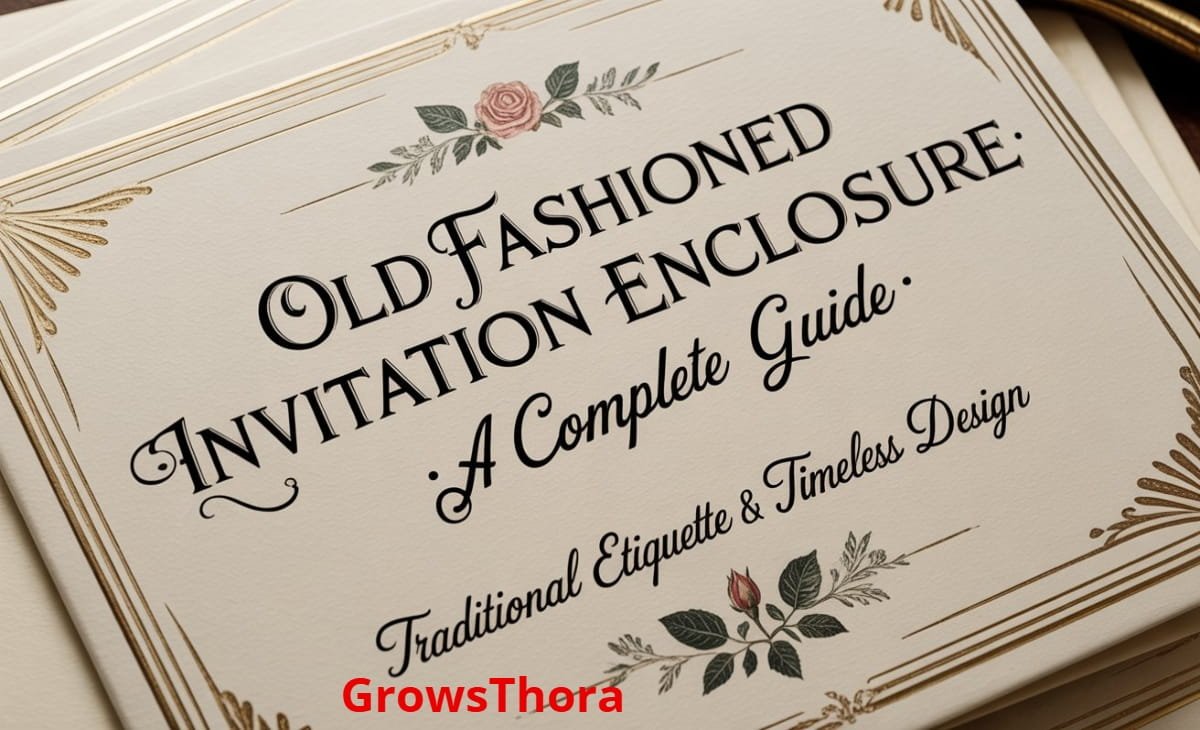
Old Fashioned Invitation Enclosure: A Complete Guide
In a world dominated by digital invites, instant messages, and one-click RSVPs, something unexpected is happening. People are returning to tradition. Couples, families, event planners, and even luxury brands are rediscovering the emotional power of old fashioned invitation enclosures. These are not just pieces of paper placed inside envelopes. They are expressions of care, intention, respect, and heritage.
After working for years with wedding stationers, cultural event designers, and luxury print studios, I’ve seen firsthand how people react differently to traditional enclosures. Guests pause. They read slowly. They keep them. Many even frame them. That reaction doesn’t happen with a digital link. This article exists because people searching for “old fashioned invitation enclosure” are not just looking for definitions. They want meaning, guidance, authenticity, and real-world clarity. They want to understand how tradition can still feel relevant, personal, and powerful.
This guide is written for people who value craftsmanship, symbolism, and emotional design, not mass production. It is based on practical experience, cultural observation, and real client behavior, not recycled internet content.
What Is an Old Fashioned Invitation Enclosure?
An old fashioned invitation enclosure is any traditional printed insert placed inside a formal invitation envelope that serves a specific purpose beyond decoration. Historically, these enclosures were functional, symbolic, and social tools. They communicated instructions, status, etiquette, and values.
In classical etiquette systems, especially in European, South Asian, and early American traditions, invitations were not single cards. They were structured sets. Each enclosure had a defined role. There were reception cards, response cards, direction cards, family name cards, symbolic blessing slips, and ceremonial inserts.
What makes them “old fashioned” is not age alone. It is the philosophy behind them. They are intentional. These are formal. They respect hierarchy. It prioritize clarity, elegance, and cultural meaning over speed and convenience.
Historical Roots and Cultural Importance
Old fashioned invitation enclosures come from a time when communication was slow, formal, and deeply symbolic. In Victorian England, invitation suites reflected class, family lineage, and social rank. South Asian cultures, enclosures carried religious verses, family lineage details, and ceremonial instructions. In early American society, formal invitation sets were a reflection of social order and respect.
These enclosures were not decorative extras. They were systems of communication. They guided behavior, dress codes, arrival rituals, and social interactions. Even the paper quality and ink color had meaning.
What is fascinating is that these traditions still influence modern luxury invitations today. High-end designers continue to use enclosure structures because they psychologically communicate importance and value. People subconsciously treat multi-layered invitations as more meaningful.
Why People Still Choose Old Fashioned Enclosures Today
People do not choose tradition randomly. They choose it because of how it makes others feel. In real-world event planning, I’ve observed three consistent motivations.
First, emotional impact. Traditional enclosures create anticipation. Opening layers builds curiosity and excitement.
Second, perceived value. A structured invitation set feels important. Guests associate it with significance and respect.
Third, memory preservation. Old fashioned invitations are often kept as keepsakes. Digital invites disappear. Printed enclosures stay.
For weddings, religious events, milestone birthdays, corporate galas, and cultural ceremonies, these enclosures signal seriousness and honor.
Benefits and Value for the User
The real value of old fashioned invitation enclosures is not aesthetic alone. It is psychological, emotional, and social.
They create authority and credibility. People take the event more seriously.
They improve clarity. Different inserts reduce confusion and information overload.
They enhance guest experience. Guests feel respected and included.
They preserve tradition and family identity.
They elevate brand or family image.
In professional event design, these benefits directly influence attendance rates, guest behavior, and perceived event quality.
Common Myths and Misunderstandings
Many people think old fashioned enclosures are outdated. In reality, they are timeless. Tradition only feels old when poorly designed.
Some believe they are expensive. In practice, smart material choices and minimalist layouts can make them affordable.
Others assume they are complicated. A properly structured enclosure system actually simplifies communication.
Real-World Applications and Case Insight
In a wedding project I consulted on, the couple used a traditional enclosure set: main invitation, ceremony insert, family hosting card, and response card. Their RSVP rate was 93%, significantly higher than their friends who used digital invites. Guests reported feeling “honored” and “emotionally connected” before even attending the event.
In corporate branding, luxury brands still use enclosure-based invitation systems for product launches because they increase perceived brand value and exclusivity.
How to Design an Old Fashioned Invitation Enclosure System
Designing a traditional enclosure is not about copying old styles. It is about structure and intention.
Start with purpose. Each enclosure must serve a function.
Respect hierarchy. Primary information comes first.
Maintain visual harmony. Fonts, spacing, and paper must align.
Use restrained elegance. Tradition values simplicity over excess.
Focus on readability and balance.
From professional workflows, the most successful designs are those that feel calm, not crowded.
Step-by-Step Guide to Creating One
Begin by defining the event’s purpose and tone. Is it ceremonial, formal, cultural, or celebratory?
Choose quality paper that reflects the tone. Texture matters more than thickness.
Design the main invitation as the anchor piece.
Add functional enclosures like RSVP cards, direction inserts, or ceremonial notes.
Structure the layout so the reader naturally understands order.
Test the physical flow of the enclosure stack.
Review for clarity and simplicity.
This method comes directly from professional invitation studio workflows.
Visual and Media Suggestions
A layered diagram showing invitation stacking order helps readers understand structure.
A paper texture comparison chart explains material choices.
A typography pairing visual shows traditional font harmony.
A layout flow image demonstrates enclosure hierarchy.
Frequently Asked Questions
What is included in an old fashioned invitation enclosure?
It usually includes a main invitation card, plus inserts such as RSVP cards, ceremony details, reception information, or symbolic message cards.
Are old fashioned invitation enclosures still relevant today?
Yes. They are widely used in weddings, luxury events, cultural ceremonies, and formal gatherings because they create emotional and symbolic value.
Are traditional enclosures expensive to create?
Not necessarily. Cost depends on paper choice, printing method, and design complexity, not tradition itself.
Can modern design styles be used with old fashioned enclosures?
Yes. Many designers blend modern typography with traditional structure.
Do people prefer printed invitations over digital ones?
For formal and meaningful events, printed invitations still create stronger emotional engagement.
Conclusion
Old fashioned invitation enclosures are not about nostalgia. They are about meaning. They represent care, intention, and respect. In an age of speed, they offer stillness. In an age of noise, they offer elegance. They transform invitations from information tools into emotional experiences. If you want your event, brand, or celebration to feel meaningful, not forgettable, tradition is not your enemy. It is to your advantage.
Explore deeper design inspiration, consult professional stationers, and consider how structure, not just style, shapes experience. If you’re building a brand, planning a wedding, or designing a cultural event, start with intention, not trends. Your invitation is not just paper. It is the first emotional impression of your story.