Finance Jobs: Careers, Skills, Salaries, and How to Get Hired
Finance jobs have always carried a certain reputation: high pay, intense competition, and long hours. But what most people don’t realize is how wide, flexible, and human the finance career landscape has become. Over the past decade, I’ve worked closely with finance professionals across banking, corporate finance, fintech, and advisory roles. What I’ve seen is a shift away from rigid career ladders toward skill-driven, opportunity-rich paths that reward curiosity as much as credentials.
This guide is written for people who are genuinely trying to understand finance jobs, not just chase buzzwords. Whether you’re a student, a career switcher, or a professional stuck in the wrong finance role, this article will help you see what actually works in today’s market.
What Are Finance Jobs, Really?
At its core, a finance job is about managing money, risk, and decisions. That sounds simple, but in practice it covers an enormous range of responsibilities. Some roles focus on forecasting future outcomes, others on protecting assets, and many on helping businesses or individuals make smarter financial choices.
Finance jobs exist anywhere money moves. That includes banks, investment firms, startups, hospitals, governments, nonprofits, and global corporations. A financial analyst in a healthcare company, for example, often has more in common with a data analyst than a Wall Street trader. This is why people often misunderstand finance careers; they imagine one narrow path when the reality is a network of options.
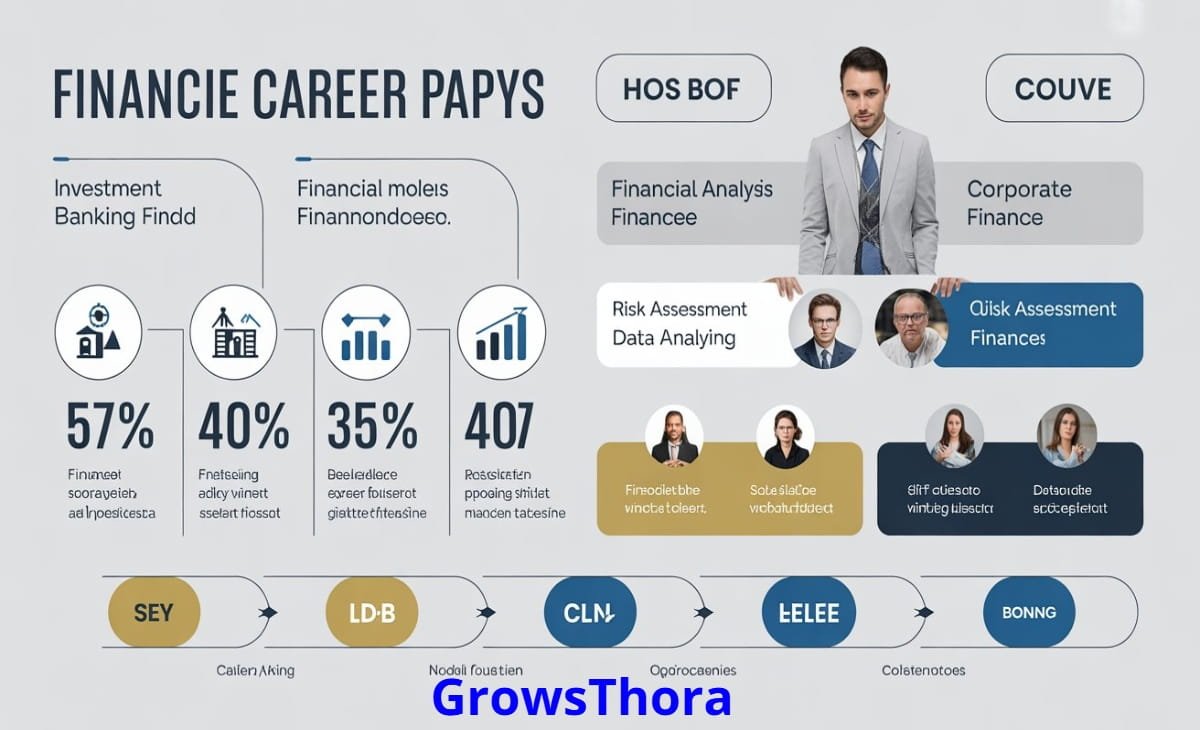
A helpful visual here would be a career map diagram showing major finance branches like corporate finance, investment roles, risk and compliance, fintech, and financial planning, with overlapping skills between them.
Why Finance Jobs Still Matter in 2025 and Beyond
Finance is no longer just about spreadsheets and quarterly reports. It now sits at the center of strategic decision-making. Companies rely on finance teams to decide whether to expand, cut costs, acquire competitors, or invest in new technology. Governments depend on finance professionals to manage public funds responsibly. Individuals trust financial advisors with retirement and life savings.
What’s changed is the skill mix. Finance jobs today value communication, data interpretation, and ethical judgment as much as technical knowledge. In my experience, the professionals who advance fastest are not the ones who know every formula, but those who can explain financial meaning clearly to non-financial people.
According to data from the U.S. Bureau of Labor Statistics, finance-related occupations are projected to grow steadily through the next decade, especially roles connected to financial analysis and advisory services.
Major Types of Finance Jobs You Should Know
1: Corporate Finance Roles
Corporate finance professionals work inside companies, helping leadership make informed decisions. Roles such as financial analyst, FP&A manager, and finance director focus on budgeting, forecasting, and performance analysis. These jobs offer stability and predictable growth, making them popular among professionals who want balance without sacrificing impact.
2: Investment and Banking Careers
Investment banking, asset management, and private equity remain competitive, but they are no longer the only high-paying finance paths. These roles involve raising capital, valuing companies, and managing investments. The hours can be demanding, but the learning curve is steep and transferable.
3: Accounting and Audit Paths
While accounting is often treated as separate, it is deeply connected to finance jobs. Accountants, auditors, and controllers ensure financial accuracy and compliance. Many CFOs start here because it builds a strong understanding of financial truth before strategic storytelling.
4: Financial Planning and Advisory Work
Financial advisors help individuals and families plan for the future. This path is often overlooked, yet it offers strong earning potential and personal fulfillment. Advisors who build trust and communicate well often outperform purely technical peers.
5: Fintech and Data-Driven Finance
Fintech has reshaped finance jobs more than any other force. Roles now blend finance with data analytics, product management, and technology. Professionals who understand both money and systems are in especially high demand.
A useful visual for this section would be a bar chart comparing average salaries across finance job categories, helping readers see realistic earning differences.
Skills That Actually Get You Hired in Finance
One myth I see repeatedly is that finance jobs require extreme math skills. In reality, most roles rely on logical thinking and pattern recognition more than advanced mathematics. The real differentiators are financial literacy, problem-solving, and communication.
Technical tools matter, but they change. I’ve seen Excel mastery open doors, then Python, and now AI-assisted analytics. What lasts is the ability to understand financial statements, interpret trends, and explain implications clearly. Hiring managers consistently prioritize candidates who can turn numbers into decisions.
Another overlooked skill is ethical judgment. With increasing regulation and public scrutiny, finance professionals are expected to question risky or misleading practices, not just execute them.
How to Start or Transition Into Finance Jobs
Breaking into finance is not as formulaic as it once was. Degrees still matter, but experience and proof of skill matter more. I’ve personally seen candidates land strong finance roles after building simple financial models, analyzing public company reports, or contributing to internal projects in unrelated jobs.
Start by identifying which finance domain aligns with your personality. If you enjoy structured problem-solving, corporate finance or accounting may fit. If persuasion and relationship-building excite you, advisory or investment roles could be better.
Learning through real-world practice is crucial. Analyze earnings reports, build sample forecasts, or volunteer to help a small business with budgeting. These experiences often carry more weight than certificates alone.
A step-by-step visual here could be a timeline graphic showing progression from learning basics to landing the first finance role.
Real Challenges and Risks in Finance Careers
Finance jobs are not immune to burnout. High responsibility, tight deadlines, and ethical pressure can wear people down. Another challenge is role misalignment. Many professionals leave finance not because they dislike finance itself, but because they chose the wrong niche.
Automation is another concern, but it’s often misunderstood. Routine tasks are being automated, yes, but this is pushing finance jobs toward higher-value thinking rather than eliminating them. Professionals who adapt by learning analysis, interpretation, and strategy remain highly relevant.
Tools and Platforms Used in Modern Finance Jobs
Modern finance professionals rely on a mix of traditional and emerging tools. Spreadsheet software remains foundational, but business intelligence platforms, financial modeling software, and cloud-based accounting systems are now standard.
AI-assisted tools are increasingly used for forecasting, anomaly detection, and scenario analysis. The professionals who use these tools effectively are not replaced by them; they become more valuable.
Trusted Sources and Further Reading
For readers who want deeper academic and institutional perspectives, Harvard Business School regularly publishes research on financial decision-making and leadership . Government labor outlooks, such as those from the U.S. Bureau of Labor Statistics, provide reliable salary and growth projections.
Frequently Asked Questions About Finance Jobs
Are finance jobs only for people with finance degrees?
No. Many professionals enter finance from economics, engineering, data, or even liberal arts backgrounds, especially in analytical and advisory roles.
Do finance jobs still pay well?
Yes, but pay varies widely by role, industry, and location. Corporate finance and advisory roles often offer stable, long-term earning growth.
Is finance a good career for the future?
Finance remains essential as long as businesses, governments, and individuals need financial decisions and accountability.
How long does it take to get a finance job?
With focused preparation, many candidates secure entry-level roles within six to twelve months, especially if they build practical experience.
Are finance jobs stressful?
Some are, especially in high-pressure environments. Choosing the right niche and employer makes a significant difference.
Conclusion
Finance jobs are not one-size-fits-all careers. They reward people who enjoy responsibility, clarity, and impact. When chosen thoughtfully, finance can offer intellectual challenge, financial stability, and long-term growth.
If you’re serious about entering or advancing in finance, explore related career guides on our site such as “Corporate Finance Career Paths Explained” or “How to Build Financial Analyst Skills Without an MBA.” If you already work in finance, consider mentoring, upskilling, or exploring adjacent roles to stay future-proof. Finance isn’t just about money. It’s about trust, judgment, and decisions that shape real lives. If that excites you, this field has room for you.