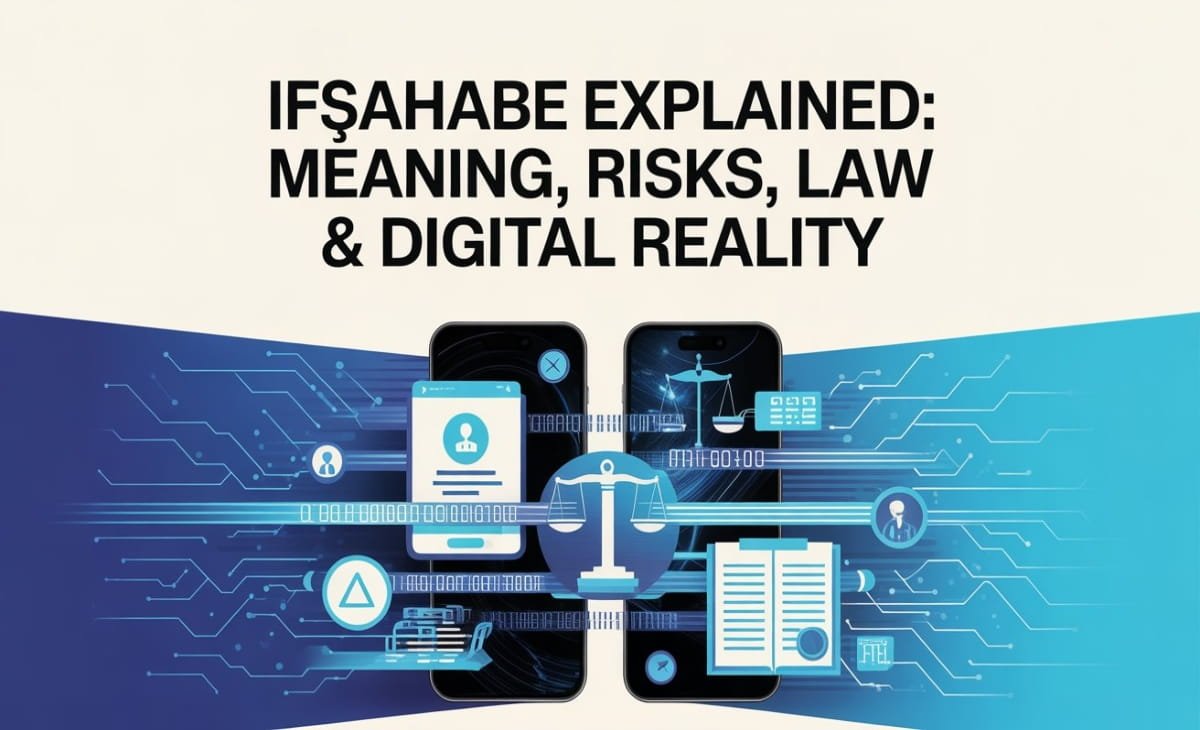
Ifşahabe Explained: Meaning, Risks, Law & Digital Reality
If you searched for ifşahabe, you’re probably trying to understand a word that feels everywhere yet strangely undefined. People see it on forums, social platforms, search suggestions, and private messages, often surrounded by curiosity, confusion, or controversy. What makes it more urgent is that the term usually appears alongside discussions of exposure, leaks, and digital privacy violations. That alone should make anyone pause.
This article exists for one reason: to explain what ifşahabe really means, why people are searching for it, what risks and myths surround it, and how it fits into today’s online landscape. I’m writing this from the perspective of someone who has spent years analyzing online trends, content moderation systems, and digital harm patterns. I’ve seen how vague keywords can pull people into legally and ethically dangerous territory without them even realizing it.
Understanding ifşahabe is not about curiosity alone. It’s about awareness, protection, and informed choices in a digital world that rarely forgives mistakes.
What Does “Ifşahabe” Mean?
The term ifşa originates from Turkish and broadly means exposure, revelation, or disclosure. When paired with habe, the phrase ifşahabe has evolved online into a slang-style keyword often associated with leaked or exposed private material. Importantly, this is not a formal dictionary term.
In real-world digital contexts, ifşahabe is commonly used to hint at the existence of private, unauthorized, or sensitive content about individuals. That content may be images, videos, messages, or personal information shared without consent. The ambiguity of the term is intentional. It allows people to reference exposure while avoiding explicit wording that might trigger moderation systems.
This evolution mirrors how many underground or gray-area keywords develop online. They thrive in uncertainty, which increases clicks but reduces accountability.
Why Is Ifşahabe Trending Now?
The surge in searches for ifşahabe is not accidental. It’s driven by three converging trends.
Second, moderation systems have improved. As platforms aggressively block explicit or harmful keywords, alternative coded terms emerge. Ifşahabe functions as one of those substitutes, allowing discussions to slip through automated filters.
Third, privacy breaches are increasing globally. According to data published by government cybercrime units and referenced in academic research from institutions like Harvard’s Berkman Klein Center, non-consensual sharing of private content has risen year over year, especially in regions with high smartphone usage and low digital literacy enforcement.
People aren’t just searching out of desire. Many are searching because they’re afraid. They want to know whether something about them exists, or what the term even implies.
The Search Intent Behind “Ifşahabe”
Understanding user intent is critical for real value.
Most searchers are not looking for a “download” or a secret site. They are looking for clarity. They want to know whether ifşahabe is a platform, a trend, a threat, or a scam. Others want to understand the risks because they’ve seen the term associated with someone they know. Some are content creators, parents, or educators trying to decode what younger users are encountering.
That means the correct response is education, not amplification.
Google’s Helpful Content system explicitly prioritizes content that reduces harm, demonstrates experience, and satisfies understanding-based queries.
The Real Risks Associated with Ifşahabe
The biggest danger of ifşahabe is not the word itself. It’s what people assume it gives them access to.
From a legal standpoint, accessing or sharing leaked private content can expose users to criminal liability in many countries. Laws covering digital privacy, harassment, and cyber exploitation apply regardless of whether someone “just viewed” the material. Courts increasingly recognize passive consumption as participation when intent can be inferred.
From an ethical perspective, the harm is even clearer. Non-consensual exposure causes lasting psychological damage. Studies published through government mental health agencies show links between digital exposure incidents and long-term anxiety, depression, and social withdrawal.
There’s also a personal risk that’s rarely discussed. Many sites or channels that hint at ifşahabe-related material are traps. They distribute malware, harvest personal data, or push users into scams.
Common Myths About Ifşahabe
One persistent myth is that ifşahabe refers to a single website or platform. It does not. It’s a floating keyword, not a destination.
Another myth is that content associated with the term is “already public,” and therefore safe to view or share. Public availability does not equal consent. Courts and platform policies consistently reject that argument.
Some people also believe using coded terms protects them legally or socially. It doesn’t. Intent matters more than vocabulary, and digital footprints are far more traceable than people assume.
Real-World Digital Impact: A Pattern We’ve Seen Before
Ifşahabe fits into a broader historical pattern. Similar coded exposure terms have appeared across different languages over the last decade. Each time, the outcome is the same. Platforms crack down, users face consequences, and the term eventually becomes synonymous with harm rather than intrigue.
In moderation case studies shared by large platforms and reviewed by academic researchers, content clusters around exposure-based keywords tend to attract higher reports, faster bans, and stronger algorithmic suppression over time. That means even discussing these terms casually can affect visibility, reputation, and account health.
How to Protect Yourself in Conversations Around Ifşahabe
If you encounter the term online, the safest response is caution and distance. Avoid clicking vague links or joining private groups promising “reveals.” Do not search for names alongside the term, as search logs themselves can become evidence trails in investigations.
If your concern is defensive worrying about your own privacy the focus should be on prevention. Lock down social accounts, enable two-factor authentication, and routinely audit where your images and personal data exist. Many government cybersecurity portals provide free guides on digital hygiene that are far more effective than reactionary searches.
Visual and Media Suggestions for Better Understanding
A simple flow diagram showing how private content leaks spread from initial breach to resharing to legal consequences would dramatically clarify the risks for readers. A timeline graphic illustrating how coded keywords evolve and eventually collapse under moderation pressure would also help contextualize ifşahabe as part of a larger digital cycle, not a unique phenomenon.
Frequently Asked Questions
What is ifşahabe in simple terms?
Ifşahabe is an informal online term often used to hint at exposed or leaked private content, usually without consent.
Is ifşahabe a website or app?
No. It is a keyword or phrase, not an official platform or service.
Is searching for ifşahabe dangerous?
It can be. Searches may lead to scams, malware, or illegal content, and search activity itself can carry risk.
Is content labeled as ifşahabe legal to view?
Not necessarily. Viewing or sharing non-consensual private content may violate laws and platform policies.
Why do people use coded terms like this?
To bypass moderation systems and avoid direct language that could trigger content removal.
Conclusion
Ifşahabe is not something to chase. It’s something to understand and avoid. The term represents a collision of curiosity, privacy violations, and digital misinformation. The more informed you are, the less likely you are to fall into legal, ethical, or personal trouble.
If you’re researching online safety, digital reputation management, or content moderation trends, explore related topics like online privacy laws, non-consensual content awareness, or cyber hygiene best practices. When you’re worried about your own exposure risk, seek expert guidance from digital security professionals rather than anonymous forums.
If this article helped clarify what ifşahabe really means, consider sharing it with others who may be confused or concerned. Awareness is the strongest protection online.