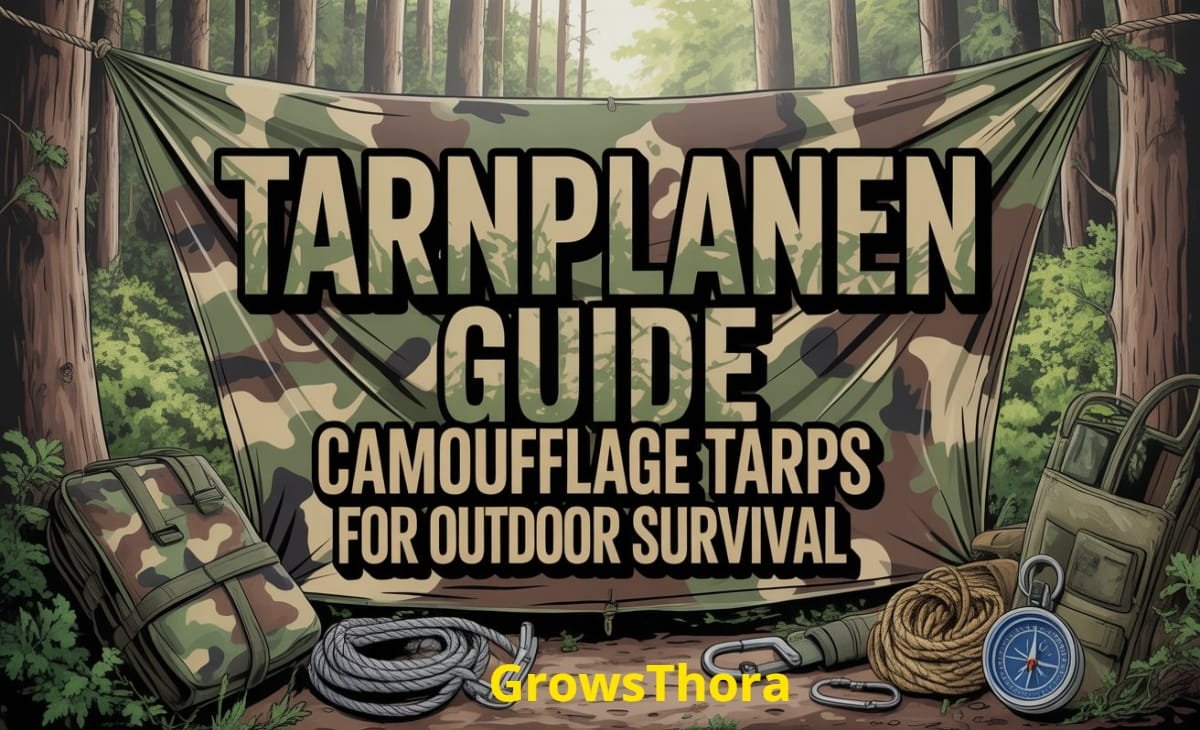
Tarnplanen Guide: Camouflage Tarps for Outdoor Survival
Tarnplanen (camouflage tarps) are no longer just military gear or survivalist tools. Today, they are essential equipment for hikers, campers, hunters, photographers, preppers, and even eco-builders who need concealment, durability, and multi-purpose outdoor protection. Yet most people buy the wrong type, misuse them, or underestimate their real potential.
From personal field use in forest camping setups and survival training environments, I’ve seen tarnplanen used incorrectly far more often than correctly. People treat them like simple plastic sheets. In reality, a high-quality tarnplane is closer to a modular survival system than a tarp.
This guide is written for people who actually want to understand what tarnplanen are, how they work, how to choose the right one, and how to use them properly, not generic buyer fluff.
What Are Tarnplanen? (Definition & Real Meaning)
“Tarnplanen” is a German term meaning camouflage tarps. The word comes from “tarnen” (to camouflage) and “plane” (tarp/sheet). These are specially designed tarps that combine weather protection with visual concealment.
Unlike normal tarps, tarnplanen are engineered for:
Natural environment blending
Light reflection control
Noise reduction
Multi-functional outdoor use
Long-term exposure durability
They are commonly used in military operations, wildlife observation, survival shelters, bushcraft, hunting blinds, emergency shelters, tactical training zones, and off-grid living environments.
A true tarnplane is not just camouflage-colored fabric. It is built with reinforced edges, grommet systems, rip-stop weaving, UV resistance, water resistance, and silent fabric textures to avoid noise when moving.
Why Tarnplanen Matter More Than Ever
Modern outdoor activity has changed. Campsites are crowded. Wildlife is more alert. Survival training has become mainstream. Privacy is harder to maintain in open environments.
At the same time, climate conditions are becoming more extreme. Sudden storms, heat exposure, and unpredictable weather demand flexible shelter systems.
Tarnplanen solve multiple problems at once:
They provide shelter from rain, sun, and wind
They allow visual concealment
They support modular shelter building
They reduce environmental impact
They adapt to multiple terrains
From personal use, one quality tarnplane can replace:
A tent rainfly
A groundsheet
A privacy wall
A wind barrier
A shade structure
An emergency bivouac cover
Types of Tarnplanen and Their Real-World Uses
Not all tarnplanen are the same. The use case matters more than the pattern.
Lightweight Tarnplanen
Used for hiking, backpacking, and mobile shelters. These are thin, packable, and fast-deploying but less durable in storms.
Heavy-Duty Tactical Tarnplanen
Used in survival camps, long-term bushcraft bases, and training zones. These are thick, reinforced, and built for repeated use.
Mesh Tarnplanen
Used mainly for observation posts, wildlife photography, and hunting hides. They allow airflow while breaking visual outlines.
Thermal Tarnplanen
Designed for cold environments. They trap heat and block wind while maintaining camouflage.
Benefits and Value of Using Tarnplanen
The biggest value of tarnplanen is functional versatility. One tarp can solve multiple problems.
They reduce visibility without isolating you from nature.
>They offer shelter without heavy infrastructure.
>They allow mobile living without permanent structures.
>They provide low-impact environmental interaction.
From a survival perspective, tarnplanen are one of the few tools that work across urban, forest, desert, and mountain environments.
In bushcraft communities, they are considered more adaptable than tents because they allow airflow control, shape customization, and terrain adaptation.
Common Myths and Mistakes
Many people assume camouflage equals invisibility. It does not. Tarnplanen works by breaking visual patterns, not making objects disappear. Another myth is that any green tarp works. Real tarnplanen use non-reflective coatings, silent materials, and environment-specific patterns.
A major mistake is incorrect tensioning. Poor setup creates unnatural lines that make shelters more visible, not less. Another mistake is buying cheap coated plastic tarps labeled as camouflage. These degrade fast, reflect light, and tear easily.
Real-World Applications and Case-Based Insight
In wildlife observation projects, tarnplanen are used to create low-profile observation blinds that allow researchers to stay close to animal habitats without disruption.
In survival training environments, instructors use tarnplanen to teach:
Shelter geometry
Weather adaptation
Concealment psychology
Environmental blending
Eco-tourism camps, they are used as low-impact shelters that don’t damage terrain or require permanent construction. In tactical photography and documentary filming, tarnplanen allow filming in sensitive natural zones without disturbing ecosystems.
How to Choose the Right Tarnplane (Expert Criteria)
From field testing experience, these are the factors that matter most:
Material density determines durability and noise level.
Water resistance must be balanced with breathability.
Grommet placement affects shelter geometry.
Camouflage patterns must match terrain, not preference.
Weight must match mobility needs.
If you hike, prioritize weight and packability.
>If you camp long-term, prioritize thickness and reinforcement.
>If you observe wildlife, prioritize silent fabric and mesh blends.
Step-by-Step Guide: Setting Up a Functional Tarnplane Shelter
First, choose natural anchor points like trees or rocks rather than artificial poles. This keeps the structure visually organic.
Second, create uneven tension. Straight lines attract attention in nature. Slight asymmetry blends better with terrain patterns.
Third, layer height properly. Lower front profile, higher rear airflow improves concealment and comfort.
Fourth, use ground blending. Cover edges with leaves, branches, or soil to remove visible tarp borders.
Fifth, control noise zones. Avoid loose flapping areas that create sound in the wind.
This setup method is used in survival training environments because it improves both shelter quality and camouflage effectiveness.
Tools, Platforms, and Techniques Related to Tarnplanen
Modern users combine tarnplanen with:
Paracord tension systems
Quick-release knots
Modular pole kits
Thermal ground layers
Portable rain gutters
Wind deflectors
Bushcraft communities use it alongside ferro rods, hammock systems, and ridge-line setups to build modular living systems.
Visual & Media Suggestions
A diagram showing shelter geometry setups (A-frame, lean-to, diamond shelter)
A terrain-matching camouflage comparison chart
A grommet tensioning layout diagram
A rainwater flow visualization setup
A wind-direction airflow diagram
These visuals help users understand not just usage, but why setups work.
Frequently Asked Questions
What are tarnplanen used for?
Tarnplanen are used for camouflage sheltering, outdoor protection, survival shelters, hunting hides, bushcraft camps, and environmental concealment systems.
Are tarnplanen waterproof?
Most high-quality tarnplanen are water-resistant or waterproof, depending on coating and material construction.
Can tarnplanen replace tents?
Yes, in many environments tarnplanen can fully replace tents when set up properly for shelter, wind protection, and rain control.
Which camouflage pattern is best?
The best pattern is terrain-matched, not visually preferred. Forest, desert, snow, and urban patterns serve different environments.
How long do tarnplanen last?
High-quality tarnplanen can last several years with proper care and storage, even under heavy outdoor use.
Conclusion
Tarnplanen are not simple camping gear. They are adaptive systems that combine shelter, concealment, survival, and environmental integration into one tool. If used correctly, they give you freedom from rigid structures, flexibility in harsh environments, and control over visibility and exposure.
They are tools for people who value self-reliance, adaptability, and intelligent outdoor design. If you want real outdoor mastery, tarnplanen are not optional gear, they are foundational systems.
Call to Action:
Explore advanced shelter setups, learn terrain-specific camouflage techniques, or consult expert survival gear resources to build your own modular outdoor system. If you’re serious about outdoor resilience, start with the right tarnplane.